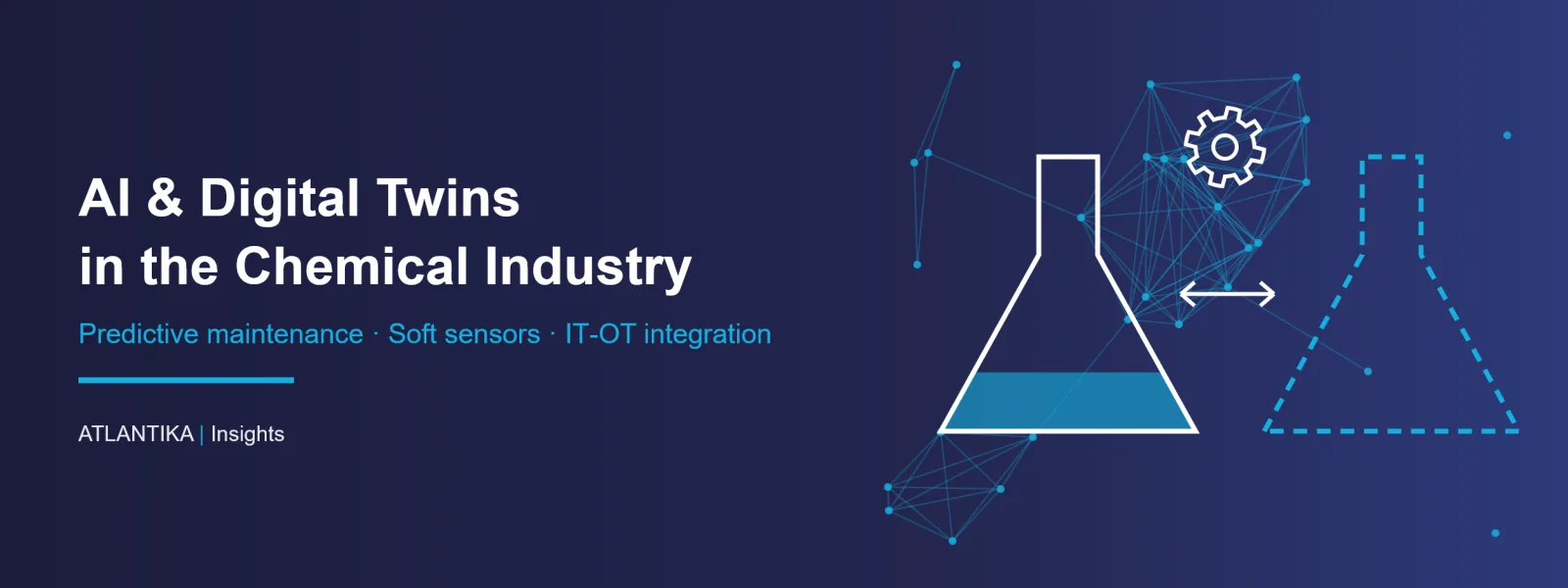
Have you ever considered how advanced technologies like AI and digital twins are revolutionizing the chemical sector? It’s truly impressive. These innovations—such as artificial intelligence and virtual replicas—are fundamentally transforming the industry’s landscape. Let’s delve into how these tools are reshaping processes, from machine learning applications to digital process models.
Transforming Chemical Manufacturing through AI and Digital Twins
The integration of AI and digital twin technology is radically reshaping chemical manufacturing across various fields. Whether it’s accelerating drug discovery or enhancing process efficiencies, these cutting-edge tools are changing the game. By utilizing AI, chemical engineers can simulate intricate reactions and accurately forecast results.
This isn’t just incremental progress; it’s a significant leap toward increased productivity and a fundamental redefinition of production paradigms, especially in areas like pharmaceutical and biopharmaceutical manufacturing.
For example, digital twins facilitate advanced simulation capabilities within biomanufacturing processes. Companies are employing these virtual counterparts to model complex operations virtually, optimizing processes before implementing them physically—thereby reducing risks and improving outcomes significantly.
Predictive Maintenance: AI Preserving Operational Continuity
One of AI’s most impactful contributions is predictive maintenance. Imagine AI algorithms that can notify operators of potential equipment failures weeks in advance! This proactive approach drastically cuts down unplanned downtimes and enhances cost efficiency—particularly evident in pharmaceutical operations where continuous production is critical.
Such predictive capabilities allow organizations to plan maintenance tasks ahead, ensuring smooth workflows and avoiding unexpected disruption. With the support of machine learning, companies can maintain operations at peak performance levels, reshaping maintenance from reactive to predictive—a true industry game-changer. Companies like Amgen already use these systems to safeguard manufacturing continuity, where batch consistency depends on the reliability of critical equipment such as bioreactors. Nor is this the preserve of large groups: one mid-sized manufacturer operating four plants reported a 43% reduction in unplanned downtime within nine months, largely because it already held most of the data it needed, scattered across three systems that never spoke to each other.
Utilizing Digital Twins for Process Simulation and Enhancement
Digital twins act as dynamic, virtual representations of real-world systems, enabling extensive process testing without physical intervention. Engineers can explore myriad scenarios and optimize parameters through countless in silico experiments.
Take Sanofi, for instance. Their facilities leverage digital twin technology to simulate process modifications prior to real-world implementation. This approach ensures process optimization, minimizes risk, and leads to consistent, high-quality production—streamlining research and development efforts in biopharmaceuticals.
Leading firms like BASF use digital twins to optimize energy flows and reduce environmental impact across large-scale facilities, while Dow applies virtual modeling to accelerate materials innovation and streamline supply chains.
Soft Sensors: Enabling Real-Time Quality Monitoring
Real-time quality assessment has traditionally depended on offline testing methods, which are time-consuming. Soft sensors eliminate this bottleneck by using machine learning models that analyze physical parameters—such as pH or oxygen saturation—to infer critical quality attributes instantly.
Amgen, for instance, uses soft sensors to monitor attributes such as glycosylation, gaining immediate insight into complex parameters and supporting quicker decision-making, tighter process control, and consistent product quality. This technology offers a transformative approach to bioprocess oversight, bringing real-time intelligence into manufacturing workflows. Closer to home, Tüpraş, recognized in the World Economic Forum’s 2026 Global Lighthouse Network, combines digital twins and soft sensors in a refinery-wide optimization layer that recommends operating setpoints on an hourly basis.
AI-Driven Manufacturing Versus Conventional Approaches
Shifting from traditional manufacturing to AI-enabled processes marks a significant evolution. Conventional methodologies depend heavily on fixed recipes and post-production testing, often leading to slower throughput and limited adaptability. AI introduces adaptive control, real-time release evaluation, and predictive maintenance, which collectively revolutionize production workflows.
Processes can now adjust automatically based on real-time data, enhancing efficiency and product quality. Digital process transfer becomes more streamlined with in silico simulations, enabling faster, more reliable scaling from lab to full-scale manufacturing. Static recipes give way to adaptive, self-optimizing systems that learn and improve continuously, a major step toward intelligent, flexible manufacturing.
The Critical Role of IT-OT Integration
For AI and digital twins to reach their full potential, seamless integration between information technology (IT) and operational technology (OT) is essential. It ensures real-time data flows from factory sensors and control systems to analytics platforms, enriching digital models with live information for better decision-making.
New solutions also make it possible to test scenarios in simulated environments before committing real investment, and to train staff within those same environments. Without this convergence, data silos impede the accuracy and responsiveness of digital twins and AI. The development of data lakes and the proliferation of IIoT devices enable comprehensive data collection, facilitating more precise process control and predictive analytics—cornerstones of modern intelligent manufacturing.
Akkim Kimya offers a telling example from the Turkish chemical sector. By connecting real-time energy data at its Yalova chlor-alkali plant, the company reports savings of around $200,000 a year from a single project, while making production data digitally traceable at its Nazilli facility has cut steam consumption by roughly 2,900 tonnes annually. An AI-supported monitoring platform now analyzes data from hundreds of sensors on its chlor-alkali line.
Economic and Operational Benefits: A Strategic Investment
Adopting AI and digital twin technologies offers substantial return on investment. By preventing equipment failures through predictive insights and optimizing processes with virtual simulations, companies realize significant savings in operational costs. One large petrochemical producer, for instance, reported a reduction of more than 9% in maintenance costs during the first year of deploying AI-driven asset diagnostics.
This efficiency boosts product quality accelerates time-to-market and enhances competitiveness. Scale benefits such as increased yields and faster R&D cycles further demonstrate that these technological investments are pivotal for modern, innovative pharmaceutical and chemical manufacturing.
Emerging Modalities and Complex Reaction Handling
As industry pushes the boundaries with innovative therapeutic modalities and complex chemical reactions, AI and digital twin technologies provide vital support. They help predict behaviors of novel compounds, optimize intricate synthetic pathways, and manage complex variables like glycosylation and process heterogeneity.
This accelerates research, enhances scale-up precision, and deepens scientific understanding—paving the way for groundbreaking medicines to reach patients faster. Leaders such as Sanofi and Amgen are harnessing these tools to seize new opportunities in the evolving biopharma landscape.
Looking Ahead: Future Trends and Possibilities
What does the future of AI and digital twin innovation look like for the chemical industry? As these technologies become more accessible, SMEs will increasingly adopt these powerful tools, accessing innovation. User-friendly platforms will simplify complex analytical processes, encouraging wider implementation across sectors. But it is important that their leadership is aligned and shares an innovative mindset. Engro Polymer & Chemicals illustrates the path: it first implemented adaptive advanced process control to support operator decisions, and only then extended digital twin technology to other areas, refining its practices with each step.
Enhanced Accessibility and User-Oriented Solutions
Imagine smaller enterprises having at their disposal the same AI-driven tools as industry giants like Sanofi and Amgen. These platforms will become more intuitive, integrated, and affordable, boosting overall industry innovation and efficiency. Major technology firms like Google and Microsoft are investing in AI advancements, promising a future where digital transformation is within reach for all.
Deeper Analytical Integration and Advanced Validation
The combination of AI with sophisticated analytical techniques—such as high-performance liquid chromatography and mass spectrometry—will provide even more precise insights into complex parameters. This integration will drive smarter bioprocess control, better understanding of glycosylation patterns, and enhanced process robustness.
Soft Sensors and Integrated Data Ecosystems
Soft sensors will become more sophisticated, analyzing multivariate physical data streams to infer critical quality attributes, optimizing bioprocess control. This will further diminish reliance on offline assays, providing continuous, real-time insights that enhance manufacturing agility. New Solutions are helping companies to add value to their data and gather their know-how for the future.
FAQs on AI and Digital Twins in the Chemical Sector
Curious about how these innovative technologies really work? Let’s clarify some common questions! You might be pondering how AI and digital twins can impact your operations or regulatory compliance. Here’s what you need to know.
What is a digital twin in the chemical industry?
Think of a digital twin as a real-time virtual replica of an actual plant or process. It uses sensor data and operational information to simulate, monitor, and optimize physical systems remotely. This allows companies to experiment virtually, improve processes, and define optimal operating conditions before implementing changes physically—just like Sanofi’s approach to process simulation and validation.
How does AI facilitate predictive maintenance?
I analyzes extensive operational data to identify early-warning signs of equipment issues. By detecting patterns and anomalies, it can notify operators well in advance of failures—sometimes weeks ahead—allowing proactive interventions. This approach reduces unplanned downtime, cuts costs, and ensures continuous process flow, especially critical in biopharma contexts.
What exactly are soft sensors?
Soft sensors are computational models that interpret physical data—such as pH, dissolved oxygen, or temperature—to estimate hard-to-measure quality attributes in real time. They eliminate the need for long offline testing, providing immediate insights that support faster decision-making and tighter process control, as exemplified by Amgen’s monitoring of glycosylation and other complex parameters.
Why is IT-OT convergence vital for AI deployment?
Integrating information technology systems with operational technology platforms creates a unified data environment. This integration ensures that real-time plant data flows seamlessly into AI models and digital twins, enabling accurate simulations, predictive analytics, and autonomous control—key enablers for advanced manufacturing processes.
Executive Considerations:
Strategic Imperatives for AI-Ready Industrial Leadership
For organizations seeking to cultivate an AI-ready leadership culture and steer a structured digital transition, Atlantika provides strategic guidance at the board and executive levels. We work alongside Turkish industrial leaders to strengthen internal capabilities, foster an informed AI mindset, and shape responsible transformation roadmaps aligned with operational realities and long-term competitiveness.
As AI, digital twins, and real-time analytics become increasingly accessible, industrial leaders are rethinking how data flows across their operations and how teams interact with technology. To support this evolution, Atlantika introduces organizations to state-of-the-art AI-enhanced industrial IoT environments—modular, intuitive platforms that unify plant data, monitor equipment health, and provide real-time operational insights. These solutions enable teams to run virtual scenarios, automate diagnostics, and optimize processes without requiring advanced coding skills.
If your organization is assessing how such capabilities could strengthen efficiency, resilience, or decision-making, Atlantika is available to guide you through relevant use cases and help frame a practical, future-oriented digital transition strategy tailored to your operational context.
Links of Interest
Artificial intelligence in digital twins, A systematic literature review
How AI and digital twins are transforming pharmaceutical manufacturing
https://turkiye.ai/yapay-zekada-asil-basari-onu-gunluk-kararlarin-parcasi-haline-getirebilmek/ https://reports.weforum.org/docs/WEF_Global_Lighthouse_Network_2026.pdf https://reports.weforum.org/docs/WEF_The_Lighthouse_Operating_System_2025.pdf https://www.beehivestrategy.com/blog/articles/case-study-manufacturer-ai-predictive-maintenance https://www.automation.com/article/case-study-ai-driven-data-reduces-refinery-maintenance-costs